By Glynn Wilson –
The California gold rush from 1848 to 1855 began on January 24, 1848, when gold was found by James W. Marshall at Sutter’s Mill in Coloma, California.

The news of gold brought approximately 300,000 people from the rest of the United States and abroad to California, which had recently been conquered from Mexico. The sudden influx of gold into the money supply reinvigorated the American economy; the sudden population increase allowed California to grow rapidly into statehood in the Compromise of 1850. The gold rush had severe effects on Native Californians and accelerated the Native American population’s decline from factors including disease, starvation, and according to certain sources, acts of unprovoked aggression, according to Wikipedia.
The effects of the gold rush were substantial. The arrival of large numbers of “forty-niners” (referring to 1849, the peak year for gold rush immigration) led to significant conflict between the newcomers and indigenous people, eventually resulting in whole tribes being displaced in some cases.
Outside of California, the first to arrive were from Oregon, Hawaii, and Latin America in late 1848. Of the approximately 300,000 people who came to California during the gold rush, about half arrived by sea and half came overland on the California Trail and the California Road; forty-niners often faced substantial hardships on the trip. While most of the newly arrived were Americans, the gold rush attracted thousands from Latin America, Europe, Australia, and China.
Agriculture and ranching expanded throughout the state to meet the needs of the settlers. San Francisco grew from a small settlement of about 200 residents in 1846 to a boomtown of about 36,000 by 1852. Roads, churches, schools and other towns were built throughout California.
In 1849, a state constitution was written. The new constitution was adopted by referendum vote; the future state’s interim first governor and legislature were chosen. In September 1850, California achieved statehood.
At the beginning of the gold rush, there was no law regarding property rights in the goldfields and a system of “staking claims” was developed. Prospectors retrieved the gold from streams and riverbeds using simple techniques, such as panning.
Although mining caused environmental harm, more sophisticated methods of gold recovery were developed and later adopted around the world. New methods of transportation developed as steamships came into regular service.
By 1869, railroads were built from California to the eastern United States. At its peak, technological advances reached a point where significant financing was required, increasing the proportion of gold companies to individual miners. Gold worth tens of billions of today’s US dollars was recovered, which led to great wealth for a few, though many who participated in the California gold rush earned little more than they had started with.
But the Gold Rush still inspires tourism, travel and the creation of art.
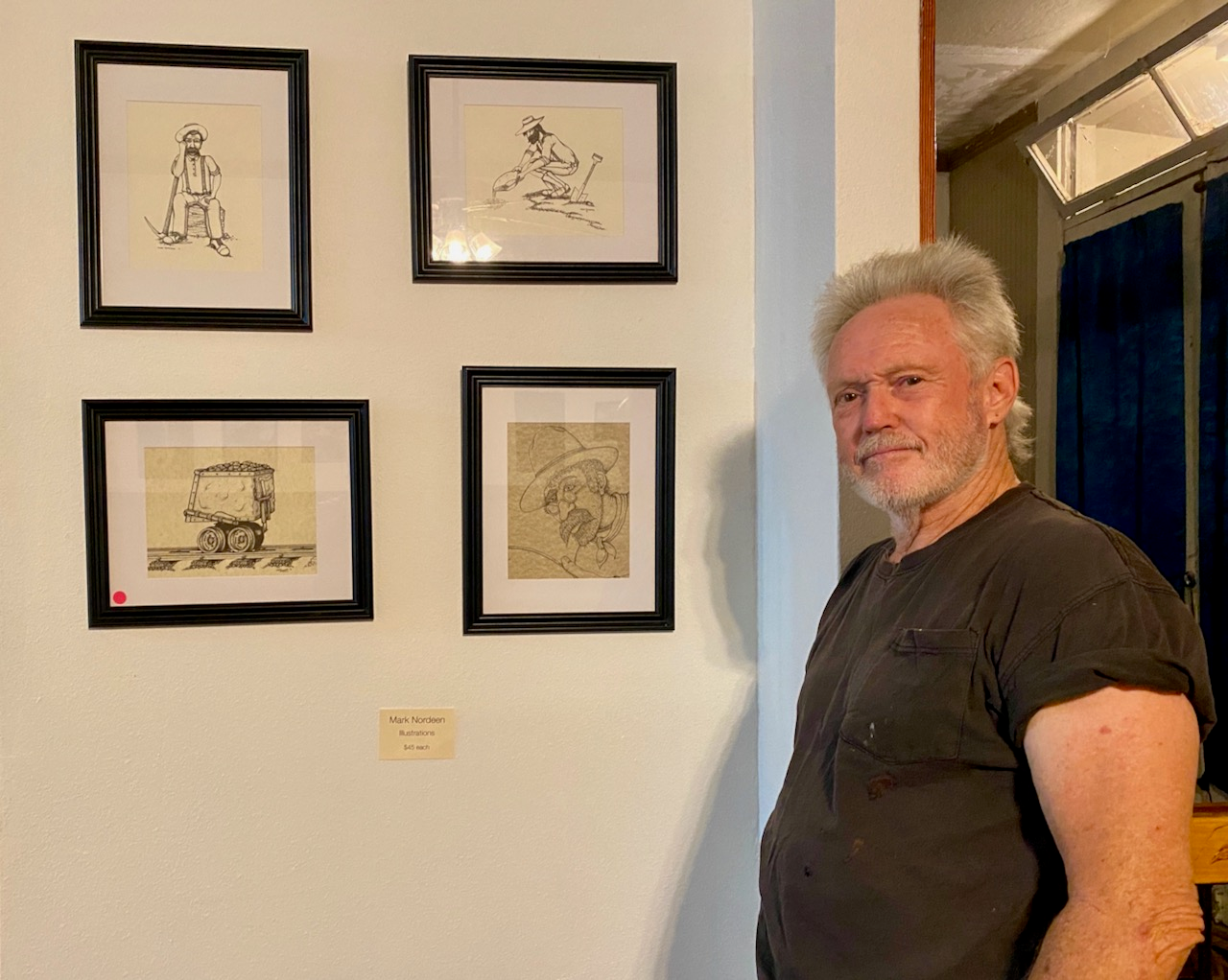
Coulterville resident Mark Nordeen, known for his guitar playing and vocals in regional bands, is also an artist now with his own gallery show in the new Yosemite Arts and Crafts Center. When he was a boy, he and his dad explored gold mines and ruins in the “motherlode” area, which inspired his interest in Gold Rush history and art.
His hand painted drawings are limited edition framed prints numbering 200. They are printed on parchment, the paper used during the Gold Rush period.


—
If you like this story and independent radio news service you can help Fund Yosemite Radio, KNHA 100.9 FM with GoFundMe.