Staff Report –
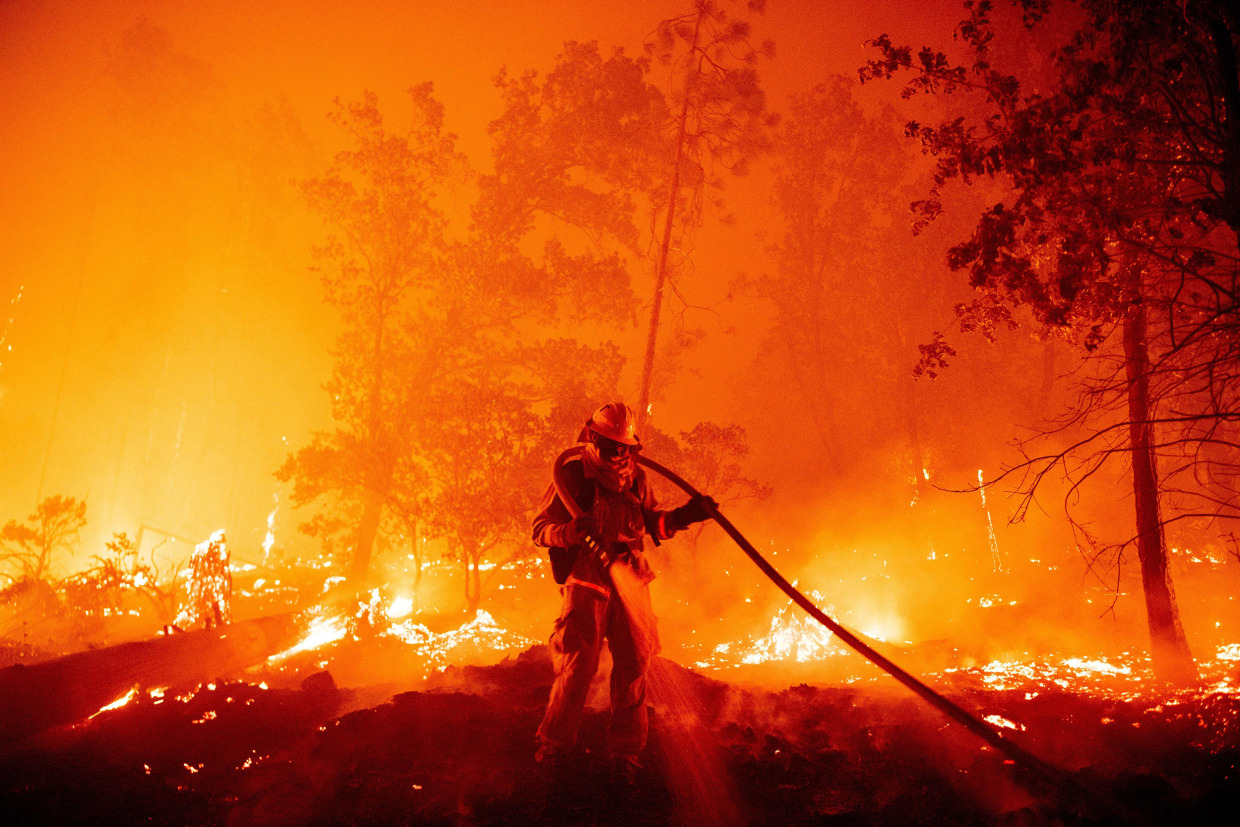
EUGENE, Ore.— About 120 current and former wildland firefighters issued an open letter Tuesday calling on members of Congress to oppose the Trump administration’s proposal to rescind the Roadless Area Conservation Rule in National Forests.
The rollback of the “Roadless Rule” would remove protections across 45 million acres of national forestlands, opening the door to more road-building and logging in these wild forest areas. The signatories have decades of experience fighting wildfires in U.S. national forests.
Although the U.S. Department of Agriculture is justifying its proposed rescission by saying the rollback will reduce wildfire risk, this assertion is scientifically inaccurate. It is the professional opinion of the wildland firefighters who signed the letter that rescinding this rule will have the opposite effect.
“New roads will mean more human access and more human-caused wildfire ignitions,” they explain in their letter. “Most logging roads in steep backcountry areas are bad tactical ground for holding firelines or staging crews.”
The existing Roadless Rule does not prevent wildfire response or fuels work, they say.
“Rescinding the Roadless Rule will push more firefighters into high-exposure, low-value suppression assignments while pulling resources away from at-risk communities.”
This knowledge, gained by years of on-the-ground firefighting experience, aligns with scientific research.
There is no compelling evidence that eliminating the Roadless Area Conservation Rule
will reduce fire risk to communities. In fact, the science shows that wildfires have a much higher chance of being started along roads. A recent study found that the highest density of wildfire ignitions is within a 50-meter zone around roads. Ignition density decreases away from roads and is smallest in places without roads (e.g., designated wilderness areas and roadless areas).
There are several reasons for this. First, people cause the large majority of unplanned fires and most people stay on or close to roads. Human-started wildfires account for 84% of all wildfires and are responsible for nearly half of all the area burned.
Second, roads lead to vegetative conditions that exacerbate fire ignitions and spread. For instance, road corridors have higher amounts of invasive species that are more likely to ignite and spread fire than native vegetation. Vegetation along the edges of roads tends to dry out sooner than interior forest vegetation, contributing to increased ignitions and higher intensity burns.
Further, roadless areas are mostly remote and generally pose low fire risk to communities. Only 6% of the 44.7 million acres of roadless forests affected by the proposed rescission of the Roadless Rule are in or within a mile of the Wildland-Urban Interface.
Where roadless areas are near communities, the Rule already allows the Forest Service to treat these areas to reduce fuels. In fact, the Forest Service has used this authority to treat 1.5 million acres of roadless areas for fuel reduction over the last two decades.
Finally, by maintaining remote National Forest areas as unroaded, the Roadless Area Conservation Rule contributes to a low-risk wildfire management strategy by providing areas with low risk of human ignitions and where fire can naturally help reduce fuels without endangering homes or firefighters.
“The bottom line is that allowing new road-building and more logging in roadless areas will increase the number of fire ignitions in remote and steep terrain,” they say in a press release with the letter. “This will increase firefighter exposure to hazardous suppression efforts with low probabilities of success and pull scarce resources away from the priority of protecting communities. Removing roadless area protections to reduce fire risk is not consistent with current scientific understanding and would not provide better protection from wildfire for communities and property.”

Read the full report and text of the letter here in the New American Journal.