While 20 percent of Americans read below a fifth-grade level and 54 percent are below the sixth-grade level, according to the National Literacy Institute, they estimate that this costs the United States up to $2.2 trillion a year in economic productivity.
Compared to other countries, we rank 36th in the world on this measure. Literacy rates are defined as the percentage of people over the age of 15 who can read and write.
Nine countries in the world have a 100 percent literacy rate: Andorra, Finland, Greenland, Liechtenstein, Luxembourg, Norway, Ukraine, Uzbekistan and North Korea. Imagine that. Thirty-seven countries have literacy rates higher than 99 percent, including Japan, Sweden, Australia, Germany, the United Kingdom, Ireland and France. Even China boasts a literacy rate of 97 percent.
How are we to compete in this world and in the future if our people can’t even read and write?
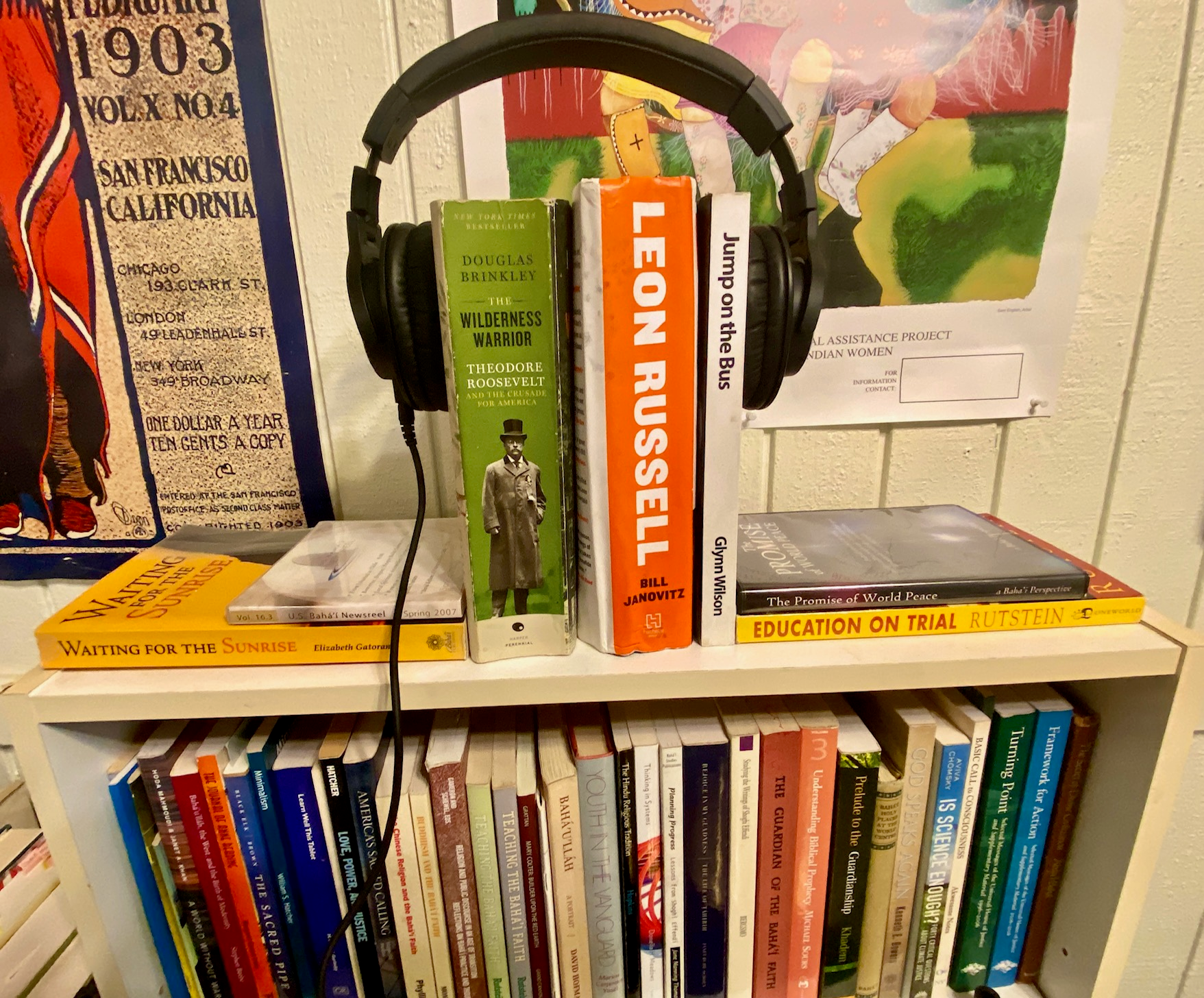
So as I was contemplating this problem recently, an idea occurred to me. What if we make American literature that is in the public domain readily available, and not only the free text, but the audio book as well? Would it not make it easier to learn to read if you could have the text in front of you without having to raise the money to buy books, and then have someone read the stories and books and make the audio version of the book available too? Listen while you read. Hit the pause button to look up the words you don’t have in your vocabulary.
So I begun to experiment with this on our new Yosemite Radio station website.
Yosemite Radio News and Events.
Then on Sunday, the New York Times ran a guest column from a librarian, who asked the question:
Do Audiobooks Count as Reading?
“Many people don’t think so,” he started out. “There is a pride — even a snobbishness — to being well read. Telling someone that you have only listened to a certain book usually comes out sounding like an apology. A recent NPR-Ipsos poll found that 41 percent of adults don’t believe audiobooks qualify as reading….
“I used to feel the same way myself,” he said. “A few years ago, sitting in an airport bar, I noticed a man next to me scrolling through his phone as a robotic voice read every word aloud at high speed. At first, I thought it was gibberish. Then I realized he was blind, using a feature on his iPhone that read aloud the text on his screen. Watching him — absorbed in the words, taking in their meaning — it struck me that he was reading the same way I did with my eyes.
“Because I have dyslexia,” he continued, “reading has never come easy. After that chance encounter, I tried a similar accessibility feature on my own iPhone. It was a revelation. For the first time, I could keep up, effortlessly absorb ideas and focus in a way I hadn’t before. My experience isn’t unusual; our definitions of reading haven’t kept up with how people actually read today.
“Reading builds empathy, focus and critical thinking,” he said. “But we seem to enjoy reading less and less. A recent study by researchers at University College London and the University of Florida published in iScience found a drop of more than 40 percent in daily reading for pleasure in the United States over the past two decades.
“At the same time, listening to books is on the rise — a trend libraries and publishers are seeing firsthand. Audiobook sales reached about $2.2 billion in the United States last year. At the New York Public Library, audio circulation rose 65 percent in the past five years while circulation for print and e-books stayed flat — a pattern mirrored nationwide. Audio has overtaken e-books in driving growth.
“So maybe,” he concluded, “even as the traditional way of reading books is in decline, the destigmatizing of audiobooks offers a path toward a more nuanced way of thinking about literacy…”
I think he may be right. And that realization is something to be thankful for.